

Resistance and Stuckness:
Trauma-Informed Strategies for Breakthrough
Led by Janina Fisher, Ph.D.
This program has limited approval for LIVE CEs. PLEASE CLICK ON THE SPECIFIC CE INFORMATION LINK BELOW FOR FULL PROFESSION/STATE DETAILS.
For those who attend the live calls, this program has limited CE approval, on a per-session basis, for Live CEs for the following:
Live Zoom Session 1: Friday, August 1st from 9-11am PDT - 2 hours - 2 CEs
Live Zoom Session 2: Friday, August 8th from 9-11am PDT - 2 hours - 2 CEs
Live Zoom Session 3: Friday, August 15th from 9-11am PDT - 2 hours - 2 CEs
Live Zoom Session 4: Friday, August 29th from 9-11am PDT - 2 hours - 2 CEs
**Live Zoom Session 5 on Friday, September 1st is an Integration and Application call, designed for deeper understanding and practical use. Therefore, CE credits will not be provided for attendance.
**CEs ARE ONLY AVAILABLE TO PARTICIPANTS WHO ATTENDED THE LIVE CALLS FOR THE ENTIRE 2-HOUR DURATION.**
** THE LIVE CEs EXPIRE ON 11/29/2025**
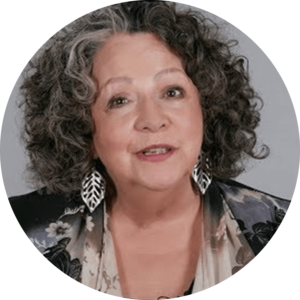 Janina Fisher, Ph.D. is a clinical psychologist, former instructor at Harvard Medical School, board member of the Trauma Research Institute, and a patron of the John Bowlby Centre, as well as an international expert on the treatment of trauma and dissociation. She is the author of Healing the Fragmented Selves of Trauma Survivors: Overcoming Self-Alienation (2017), Transforming the Living Legacy of Trauma: A Workbook for Survivors and Therapists (2021), and the Living Legacy Instructional Flip Chart (2022). Best known for her work on integrating newer neurobiologically-informed interventions into traditional psychotherapy approaches, she is the co-author with Pat Ogden of Sensorimotor Psychotherapy: Interventions for Attachment and Trauma (2015).
Coming to therapy is a cry for help, requiring the ability to acknowledge vulnerability. But for
those who have been abused, abandoned, or rejected, being vulnerable is associated with
powerlessness, humiliation, and violence. No matter how much clients sincerely want our help,
they cannot control instinctive fight, flight, or submission defenses stimulated in relationships to
other human beings.
Should clients commit to therapy or should they flee? Combat the therapist’s every effort? Or
“submit” by coming but not fully participating? Seeking help may bring initial relief in a
moment of crisis but also inevitably raises doubts: Is it better to trust or avoid trusting?
Whether resistance manifests as a passive-aggressive ‘no’ to every intervention or desperation
for help alternating with resistance to accepting it, the underlying dilemma is the same. What we
label “resistance” reflects trauma-related conflicts activated by all forms of treatment and all
types of therapists.
In this series, we will explore the complex relationships between these trauma-related conflicts
and stuckness or resistance in psychotherapy. Using techniques drawn from Sensorimotor
Psychotherapy, Internal Family Systems, and other mindfulness-based models, participants will
learn how to de-code these impasses and help clients work with them as internal conflicts, not a
therapeutic issue. When we help individuals “befriend” the resistance, we become part of the
solution instead of part of the problem.
Resistance and Stuckness: Trauma-Informed Strategies for Breakthrough
Agenda
We begin by challenging the traditional view of resistance. Rather than seeing it as opposition, you’ll learn how to recognize it as a protective survival response—an instinctive defense rooted in trauma. We’ll explore the many forms resistance can take in the therapy room: the help-rejecting client, the compliant-but-disengaged one, and the individuals who appear hopeless, shut down, or highly controlling. You’ll also learn how therapy itself can unintentionally evoke animal defense responses—such as fight, flight, freeze, or submission—and how to work skillfully with those reactions without reinforcing them.
Session Agenda:
- The many “flavors” of stuckness and resistance (30 min)
- The help-rejecting complainer, clients who are shut down and ‘not there,’
hopelessness and immobility, avoidance, and clients who struggle for control (15 min) - Understanding trauma-related phobias of vulnerability, closeness and distance,
visibility and invisibility, hypervigilance and mistrust (25 min) - How therapy evokes animal defense survival responses (20 min)
- Q & A (30 min)
Live Zoom Session 2 – August 8th – 9-11am PDT – Conceptualizing Resistance and Stuckness as a Parts Problem - 2 Hours – 2 CEs
In this session, we’ll reframe resistance through the lens of parts work and structural dissociation. Rather than asking why a client isn’t cooperating, we’ll learn to ask: Which part of them is resisting, and why? You’ll gain a practical understanding of how to map and make sense of clients’ internal conflicts, where some parts seek connection and healing, while others are still protecting against past danger. By shifting from confrontation to collaboration with protective parts, you’ll discover how to reduce power struggles and help clients feel more integrated, empowered, and safe.
Session Agenda:
- The Structural Dissociation Model as a map for understanding inner conflicts (25 min)
- Animal defense, survival responses, and strategies (20 min)
- Re-framing resistance as an adaptive response to trauma (20 min)
- Deconstructing resistance and stuckness as a parts issue—some parts want help,
some fear it, and others fight to resist it (25 min) - Q & A (30 min)
Live Zoom Session 3 – August 15, 2025 – 9-11am PDT – Overcoming the Therapist’s Resistance to Resistance - 2 Hours – 2 CEs
This session turns the focus inward, on our own countertransference. As therapists, we too can feel resistant: resistant to clients who refuse our help, challenge our expertise, or seem to sabotage their own progress. You’ll learn how to notice and regulate your own nervous system responses in the face of therapeutic impasse. We’ll explore how to navigate the client’s fear of both closeness and distance, and how to use moments of tension as opportunities for growth. You’ll also discover how playfulness and curiosity can soften resistance and reintroduce movement into seemingly stuck dynamics.
Session Agenda:
- Overcoming our ‘resistance’ to client resistance (20 min)
- The unspoken competing agendas of client and therapist (15 min)
- How our minds and bodies respond to client stuckness (25 min)
- Navigating the client’s fear of closeness and fear of distance (10 min)
- Psychotherapy as “play space:” the therapeutic benefits of laughter and
playfulness (20 min) - Q & A (30 mins)
Live Zoom Session 4 – August 29, 2025 – 9-11am PDT – Healing the Wounds of the Past- 2 Hours – 2 CEs
In this call, we turn toward the deeper healing work: the trauma wounds at the core of resistance and stuckness. You’ll learn how to help clients soothe the parts of themselves that are still in survival mode—without rushing the process or bypassing their defenses. We’ll explore techniques to facilitate inner dialogue, negotiate with protective parts, and support self-compassion as a path to integration. This session is about shifting from protection to connection, and from internal conflict to internal cooperation.
Session Agenda:
- Addressing the traumatic wounding responsible for stuckness and resistance (15 min)
- Internal soothing and comfort for the hurt and fearful part (20 min)
- “Negotiated settlements” with protectors (15 min)
- Collaborating with parts who resist (20 min)
- Enjoying the struggles as part of the work rather than resisting them (10 min)
- Facilitating client self-compassion (10 min)
- Q & A (30 mins)
Resistance And Stuckness:
Trauma-Informed Strategies for Breakthrough
Live Session Learning Objectives
Live Session 1
- Identify at least three effects of traumatic experience on attachment formation
- Discuss the role of implicit memory in the development and manifestation of post-traumatic symptoms
- Describe at least two common manifestations of animal defense survival responses in clinical clients
Live Session 2
- Summarize the core components of the Structural Dissociation model
- Describe at least three common conflicts that can arise between different survival defenses
- Differentiate between client "parts" that actively seek help and those that exhibit resistance
- Articulate the adaptive value of client resistance or "stuckness" in the therapeutic process
Live Session 3
- Describe at least three aspects of psychotherapy that are likely to evoke defensive responses in traumatized clients
- Discuss common countertransference challenges encountered when working with client resistance and "stuckness"
- Utilize at least two techniques for fostering right-brain to right-brain communication in the therapeutic setting
- Articulate at least three therapeutic benefits of incorporating playfulness and laughter into psychotherapy
Live Session 4
- Discuss at least three strategies for effectively evoking curiosity in clients who present as stuck or resistant
- Articulate the therapeutic role and benefits of "re-framing" client symptoms
- Utilize two distinct interventions aimed at facilitating internal soothing of distressed client "parts"
- Employ two specific interventions designed to cultivate and enhance self-compassion in clients
Intermediate mental health care practitioners.
To receive continuing education credit, applicants must complete all CE materials, comply with attendance regulations, and submit an evaluation form for the sessions attended. It is the responsibility of the attendee to determine if CE credit offered by Academy of Therapy Wisdom meets the regulations of their state licensing/certification board.
Evaluation
Each session will require that an evaluation be completed to obtain the CEs for this training.
Cost
CEs for this training are $10 for each 2-hour session.
Continuing Education credits offered:
Psychology: Not offered with this training.
Counseling:
 Live: Academy of Therapy Wisdom has been approved by NBCC as an Approved Continuing Education Provider, ACEP No. 7370. Programs that do not qualify for NBCC credit are clearly identified. Academy of Therapy Wisdom is solely responsible for all aspects of the programs. This program is approved for 2 CE Credit hours for each live session for a possible total of 8 CE Credit Hours.
NY State Mental Health Counselors: Academy of Therapy Wisdom is recognized by the New York State Education Department's State Board for Mental Health Practitioners as an approved provider of continuing education for licensed mental health counselors. #MHC-0285.
Social Work:
Live: This program has been approved for 2 hours per session (for a total of 8) Social Work Continuing Education hours for relicensure, in accordance with 258 CMR. NASW-MA Chapter CE Approving Program, Authorization Number D 10394-1-4.
New York Social Workers - Live: Academy of Therapy Wisdom is recognized by the New York State Education Department's State Board for Social Workers as an approved provider of continuing education for licensed social workers. #SW-0814.
Marriage and Family Therapists:
California Professionals:
Live: Academy of Therapy Wisdom, Provider #1032323, is approved by the California Association of Marriage and Family Therapists to sponsor continuing education for LMFTs, LCSWs, and LPCCs. Academy of Therapy Wisdom maintains responsibility for this program/course and its content. This course meets the qualifications for 2 hours of continuing education credit per session (for a total of 8 continuing education hours) for LMFTs, LCSWs, LPCCs, as required by the California Board of Behavioral Sciences.
This course is $297. You can purchase it here.
If you for some reason are not satisfied with the course, you have 7 days from the first live call or your purchase date to request a cancellation and a refund. Please refer to the policy section for details on how to cancel.
Commercial Support Disclaimer
This program is provided solely by the Academy of Therapy Wisdom and its teachers. There is no conflict of interest for this program.
Disability Access
If you require ADA accommodations please contact our office 30 days or more before the event. We cannot ensure accommodations without adequate prior notification.
Cancellation Policy
You may request a refund within 7 days of the first live call or 7 days after your date of purchase, whichever is later. Please contact support@therapywisdom.com if you wish to cancel your purchase.
After 7 days from the first live call or your date of purchase, you will no longer be eligible for a refund and will be responsible for the payment in full.
Grievance Policy
Grievances shall be submitted via the form found here and acknowledgement of receipt sent within 24 hours. The Program Administrator will review the grievance and respond back to the participant within 2 business days. Please use this form if you would like to submit a grievance with Academy of Therapy Wisdom for any of the following reasons:
- Refund requests
- Complaints about course content
- Complaints about facilities
- Complaints about non-receipt of certificates
- Complaints about miscellaneous occurrences
For questions or concerns, please send an email to support@therapywisdom.com.
Academy of Therapy Wisdom
1530 Lee Hill Drive, Unit 7
Boulder, CO 80304
303-447-8123
support@therapywisdom.com
www.therapywisdom.com