Advanced Integrative Trauma Therapy: A Comprehensive 5-Month Training to Deepen Your Clinical Maps, Tools, and Meta-Skills

Robert Schwarz · PsyD
This program has limited approval for Distance Learning/Home Study CEs. PLEASE CLICK ON THE SPECIFIC CE INFORMATION LINK BELOW FOR FULL PROFESSION/STATE DETAILS.
It is the participant’s responsibility to check if their state is approved for CEs. Please click on the Specific CE Information link below for more details.
Course Details
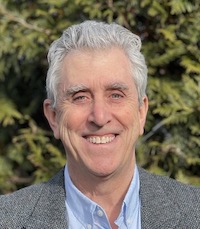 Robert Schwarz, PsyD, DCEP, ACAP-EFT has been a licensed psychologist for over 40 years. He was executive director of the Association for Comprehensive Energy Psychology from 2008-2024. Bob has organized over 30 conferences on Ericksonian hypnosis, trauma treatment, and energy psychology, ACEP’s Science of energy healing online programs and ACEP’s EFT training program.
He has authored 3 books including: Tools for Transforming Trauma and We’re No Fun Anymore: Guiding Couples to a Joy Filled Marriage, as well as numerous articles and papers. He recently released a new online program Transforming Trauma and limiting Beliefs with EFT
Bob presents workshops and keynotes internationally on EFT and energy psychology and trauma treatment. He is known for his ability to provide specific clinical skills within an integrative model. Bob believes that it is crucial to prioritize joy and creativity in one’s life. He does this personally through music and songwriting and improv.
Learn more at https://www.doctor-bob.com/
This course presents Resource-Based Integrative Therapy (RBIT) as an ecosystemic, phase-oriented approach to trauma treatment. RBIT provides maps for understanding the architecture of the mind and the process of therapeutic remodeling—how experience is constructed through interacting states of consciousness, memories, meanings, physiological processes, relationships, resources, and patterns of action.
From a constructivist perspective, trauma is understood not simply as something that happened in the past, but as an organization of experience that continues to shape present functioning. The course expands trauma treatment beyond symptom reduction and memory processing to an ecosystemic model of trauma and healing. Treatment emphasizes building and reconnecting internal and external resources; strengthening physiological, emotional, and relational regulation; updating traumatic memory and meaning through reconsolidation; and increasing integration, flexibility, and connection.
Within a phase-oriented framework, participants learn a Tools Framework for selecting and adapting interventions according to the client, state, goal, and moment. Tools include breathing and regulation strategies, visual submodalities, Trauma Reassociative Conditioning, Yes, And, future-oriented and identity-based interventions, and EFT approaches including Tearless Trauma and Tell the Story.
The course also expands the endpoint of trauma therapy beyond recovery toward agency, directionality, and flourishing—helping clients increasingly organize their lives around what matters to them.
Throughout the course, seven Meta-Skills are woven into the teaching and application of the tools. If RBIT provides the maps of the architecture and remodeling process, the Seven Meta-Skills are the master clinical capacities required to navigate that architecture and carry out the remodeling process with precision, flexibility, collaboration, and effectiveness.
Advanced Integrative Trauma Therapy: A Comprehensive 5-Month Training to Deepen Your Clinical Maps, Tools, and Meta-Skills - Agenda
Module 1 (pre-recorded) – Reducing Dysregulation: Physiology and Affect - 1 hr 30 mins
This module introduces the Resource-Based Integrative Therapy framework and the major maps used throughout the course. Participants learn phase-oriented trauma treatment, the States of Consciousness model, the ecosystemic model of trauma and healing, and the idea that therapy remodels the architecture of present-moment experience. The module emphasizes resource-building, regulation, and the distinction between trauma-organized and resourceful states. Practical Phase 1 interventions include Tiger to Kitten Breathing and visual submodality shifts for reducing intensity.
Session Agenda:
Introductory Models (13 min)
Meta-skills and the States of Consciousness Model (27 min)
Tools Model (13 min)
Tiger to Kittens Breathing (16 min)
Sub-modalities for Reducing Dysregulation (21 min)
Module 2 (pre-recorded) – Reducing Dysregulation: Boundaries - 1 hr 18 min
Module 2 begins with practical work on boundaries and grounding and then introduces the Meta-Skill Model as the master clinical capacities that guide therapeutic remodeling. The module includes Meta-Skill 1: Theory-to-Practice Integration; Meta-Skill 2: Collaborative, Non-Pathologizing Mindset; Meta-Skill 5: Precision Attending; Meta-Skill 6: Precision in Crafting Interventions; and Meta-Skill 7: Facilitating Transformational Experience. These capacities are taught as ways of translating maps into precise, flexible clinical action.
Session Agenda:
Tool: Boundaries Problem Solving Checklist (12 min)
Tool: 54321 Grounding Technique (7 min)
Tool: Scheduling Containment (6 min)
Tool: Zip Up (7 min)
Meta Skill 2: Collaborative, Non-Pathologizing Mindset (18 min)
Meta Skills 5 & 6: Precision Attending; Crafting Precision Interventions (18 min)
Meta Skill 7: Facilitating Transformative Experience (10 min)
Module 3 (pre-recorded) – Phase 2 of Trauma Treatment - 3 hr 7 min
Module 3 turns toward Phase 2 trauma work and focuses on the therapist capacities needed to remain open, grounded, and emotionally present while traumatic material is activated. This is where Meta-Skill 3: Curious Non-Attachment and Meta-Skill 4: Empathic Presence in the Face of Suffering are developed. These meta-skills then become the relational and regulatory foundation for memory reconsolidation, Trauma Reassociative Conditioning, and the Yes, And intervention.
Phase 2 of Trauma Treatment (19 min)
A Different View of Dissociation (9 min)
Tool: Trauma Reassociative Conditioning (TRC) (29 min)
Demo: Trauma Reassociative Conditioning TRC (37 min)
Beth Demo (1 hr 1 min)
Full Ecosystemic Model: First Look (17 min)
Tool: Yes, And (The Rolodex of Resources) (15 min)
Module 4 (pre-recorded) – Phase 3 of Trauma Treatment - 1 hr 22 min
Module 4 reconceptualizes Phase 3 as a process that begins much earlier than the end of memory work. Desired futures, identity, agency, and life direction are understood as organizing influences in the present. Participants explore the Holistic Self, future orientation, agency, and techniques that help spread therapeutic gains into relationships, behavior, identity, and everyday life.
Phase 3 Reconceptualized (23 min)
The Holistic Self (18 min)
Phase 3 General Treatment Protocol (20 min)
Self Image Thinking (14 min)
Get A Life Therapy (7 min)
Module 5 (pre-recorded) – Emotional Freedom Techniques (EFT) - 2 hr 27 min
Module 5 applies the RBIT maps, phase framework, and Meta-Skills to Emotional Freedom Techniques. EFT is presented within advanced integrative trauma therapy rather than as an isolated tapping protocol. Participants distinguish EFT for self-regulation from reparative/root-cause work, learn the basic procedure, identify and treat specific aspects, and use Tearless Trauma and Tell the Story as titrated approaches to traumatic memory. The module concludes by connecting EFT to reconsolidation, belief change, identity, and Phase 3 integration.
Introduction (3 min)
Basic Formula (12 min)
EFT Demo (34 min)
Exercise: Experiential EFT Practice (10 min)
Tell the Story Technique (18 min)
Tell the Story Technique Demo (23 min)
Personal Peace Procedures as Treatment Plans (5 min)
EFT in Phase 3 of Trauma Treatment (19 min)
Conclusion to Module 5 (6 min)
Course Wrap-Up (17 min)
Advanced Integrative Trauma Therapy: A Comprehensive 5-Month Training to Deepen Your Clinical Maps, Tools, and Meta-Skills - Learning Objectives
Module 1
Identify at least four characteristics of Resource-Based Integrative Trauma Treatment that distinguish its resource-based, experiential, integrative, and non-pathologizing orientation.
Identify at least five components of a state of consciousness that can organize a person’s moment-to-moment experience, including perception, emotion, memory, meaning, physiological arousal, and behavior.
Identify at least three differences between trauma-organized states and more resourceful states of consciousness, including differences in regulation, appraisal of danger or safety, access to resources, flexibility, and agency.
Module 2
Delineate at least three characteristics of a collaborative, non-pathologizing therapeutic stance.
Describe at least 3 aspects of the Meta-Skill 5: Precision Attending.
Analyze and discuss at least 3 reasons that Erickson’s Utilization principle is a key aspect of Meta Skill 5 Precision attending and Meta Skill 6 Precision Interventions.
Module 3
Identify at least four ways access to resourceful states can change the way traumatic memories are experienced and processed.
Describe at least three principles of titration and specificity used to keep trauma work within a therapeutically useful level of activation.
Identify at least five major steps in Trauma Reassociative Conditioning, from preparation and calibration of the trauma state through resource activation, trauma-memory work, and integration.
Module 4
Describe at least three ways agency is influenced by a person’s internal states, available resources, and relational or environmental context.
Delineate the five major dimensions of the Holistic Self model, including access to resources, boundaries, valuing previously disowned aspects of self, placing experience in a larger context, and acknowledging “that what is.”
Identify at least four ways therapists can help clients generalize changes made in therapy into identity, relationships, behavior, and everyday life.
Module 5
Describe the two major modes of EFT use presented in the course and identify at least three differences between EFT used for self-regulation and EFT used for reparative or root-cause work.
Identify at least five basic components involved in conducting an EFT intervention, including selecting a target, assessing intensity, constructing the setup statement, tapping, and reassessing the response.
Identify at least four categories of specific aspects that can be targeted during EFT trauma work, including sensory details, emotions, bodily sensations, and meanings or cognitions.
Advanced mental health care practitioners.
To receive continuing education credit, applicants must complete all CE materials, submit a course evaluation form, and score 80% or higher on the post-test. Attendees are responsible for determining whether the CE credit offered by Academy of Therapy Wisdom meets their state licensing/certification board's regulations.
Cost
CEs are included in the cost of this training.
Continuing Education credits offered:
Psychology:
We are working on getting APA CEs for this training. Please check back for more information.
Counseling: Academy of Therapy Wisdom has been approved by NBCC as an Approved Continuing Education Provider, ACEP No. 7370. Programs that do not qualify for NBCC credit are clearly identified. Academy of Therapy Wisdom is solely responsible for all aspects of the programs. This program is approved for 10 CE Credit hours.
NY State Mental Health Counselors: Academy of Therapy Wisdom is recognized by the New York State Education Department’s State Board for Mental Health Practitioners as an approved provider of continuing education for licensed mental health counselors. #MHC-0285.
Social Work:
Please check with your State governing agency to see if they accept APA CEs.
New York Social Workers – Academy of Therapy Wisdom is recognized by the New York State Education Department’s State Board for Social Workers as an approved provider of continuing education for licensed social workers. #SW-0814.
Marriage and Family Therapists:
California Professionals:
Academy of Therapy Wisdom, Provider #1032323, is approved by the California Association of Marriage and Family Therapists to sponsor continuing education for LMFTs, LCSWs, and LPCCs. Academy of Therapy Wisdom maintains responsibility for this program/course and its content. This course meets the qualifications for 10 hours of continuing education credit for LMFTs, LCSWs, LPCCs, as required by the California Board of Behavioral Sciences.
This course is $997. You can purchase it here.
We offer a 14-day money-back guarantee on all of our live & on-demand courses. If you find that the training is not right for you, please email us at support@therapywisdom.com within 14 days of your purchase. You can request a full refund or exchange, whichever you would prefer.
Commercial Support Disclaimer
This program is provided solely by the Academy of Therapy Wisdom and its teachers. There is no conflict of interest for this program.
Disability Access
If you require ADA accommodations please contact our office 30 days or more before the event. We cannot ensure accommodations without adequate prior notification.
Cancellation Policy
We offer a 14-day money-back guarantee on all of our live & on-demand courses. If you find that the training is not right for you, please email us at support@therapywisdom.com within 14 days of your purchase. You can request a full refund or exchange, whichever you would prefer.
Grievance Policy
Grievances shall be submitted via the form found here and acknowledgement of receipt sent within 24 hours. The Program Administrator will review the grievance and respond back to the participant within 2 business days. Please use this form if you would like to submit a grievance with Academy of Therapy Wisdom for any of the following reasons:
- Refund requests
- Complaints about course content
- Complaints about facilities
- Complaints about non-receipt of certificates
- Complaints about miscellaneous occurrences
Additional Policies
For questions or concerns, please email support@therapywisdom.com.